
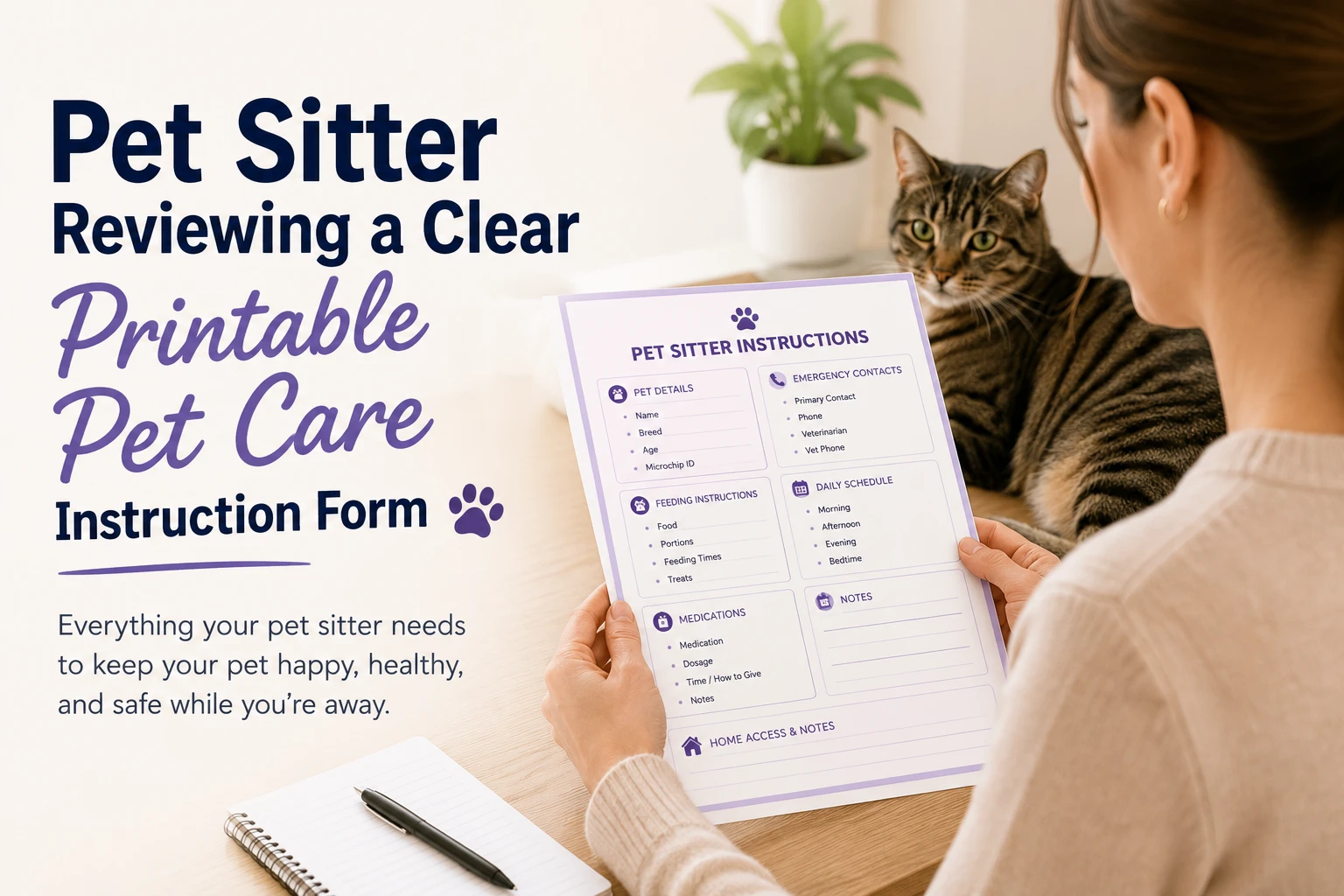
Create One Organized Guide
Choose the Pet Sitting Form, add the details that matter, and download a clean PDF. No account, no subscription, and your entered information is not stored.
Leaving Your Pet Is Hard Enough
You know your pet’s routine. You know which bowl they prefer, what time dinner officially begins, which toy cannot possibly be replaced by the other 47 toys, and which dramatic stare means, “You are three minutes late.”
Your pet sitter does not automatically know any of that.
You could leave sticky notes on the counter, send a chain of text messages, and hope the veterinarian’s number does not get buried beneath a photo of your suitcase.
Or you can place everything into one clear, printable guide.
The Needy Cat Media Pet Sitting Form walks you through the information your sitter may need, organizes it into one document, and lets you download a clean PDF when you are finished.
It does not replace a conversation with your sitter. It makes that conversation easier and gives them something reliable to reference after you leave.
Start by Selecting the Pet Sitting Form
Open the Needy Cat Media Form Builder and select Pet Sitting Form from the template menu.
The layout is already built. You do not have to design the page, move text boxes, adjust margins, or negotiate with a document editor that has suddenly decided every sentence belongs on page two.
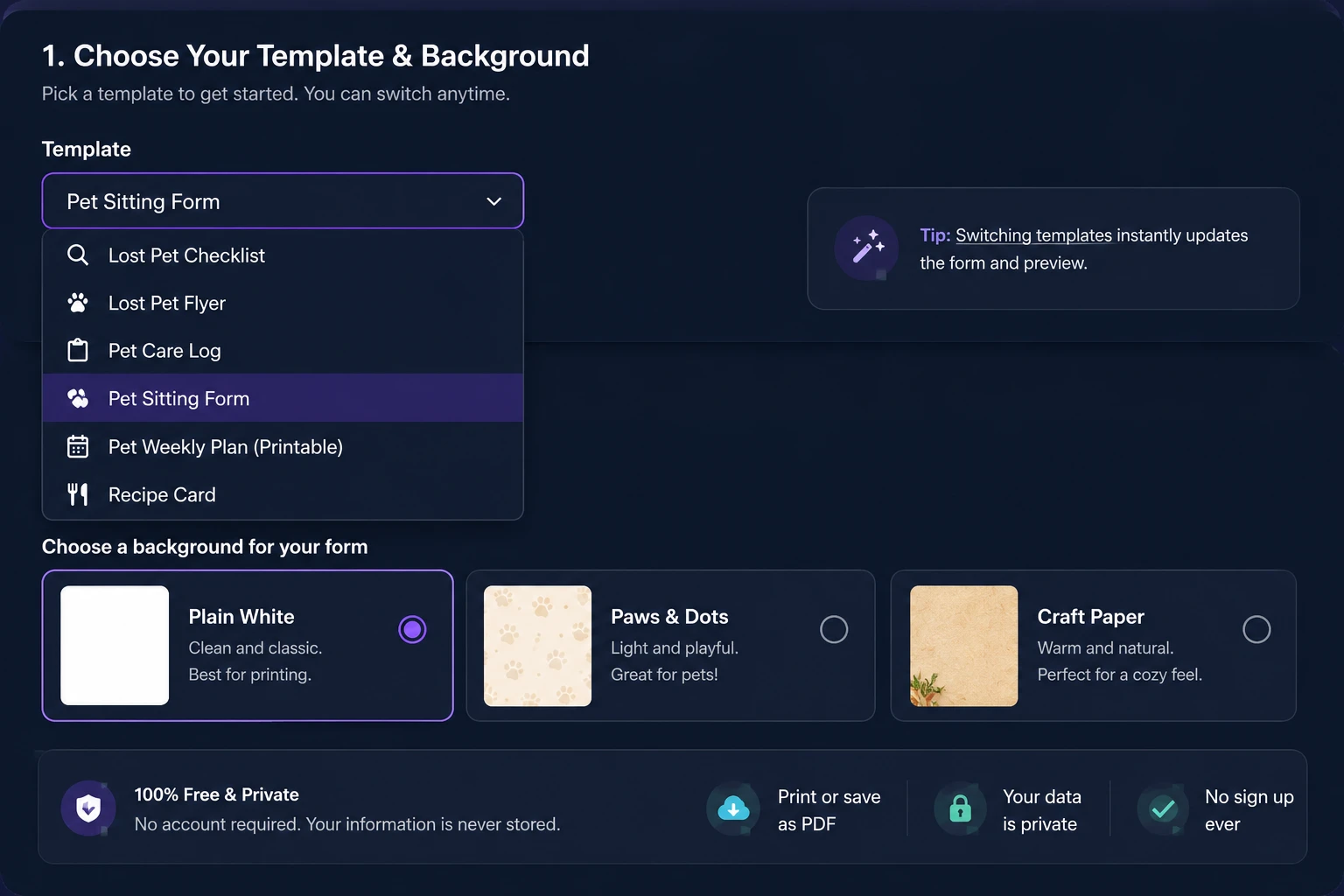
Select the Pet Sitting Form and begin adding the care details your sitter needs.
You can then work through the form one section at a time. That is far easier than trying to remember every detail while packing, checking reservations, and explaining to your pet that you are not abandoning them forever.
Add the Care Dates and Basic Pet Details
Start with a simple overview so the sitter immediately knows who the form is for and when the care period begins.
- Pet name
- Type or breed
- Care start and end dates
- Pet sitter’s name
- A current pet photo, where supported
This becomes especially useful when there are multiple pets, more than one caregiver, or several trips planned close together. It prevents the surprisingly common question, “Am I starting tonight or tomorrow morning?”
Keep Owner, Backup, and Veterinary Contacts Together
Your sitter should not have to search through old messages when they need help.
The form gives you one place to include:
- Your preferred contact information
- A backup emergency contact
- Your veterinarian’s name and phone number
- Emergency veterinary clinic details
- Instructions for what to do if you cannot be reached
A backup contact should be someone who knows your pet and is willing to step in. During an emergency, nobody should have to search a group chat called “Vacation Stuff” to find the right phone number.
Build the Contact Section Now
Add the owner, backup, veterinary, and emergency information while it is easy to verify.
Write Feeding Instructions That Cannot Be Misread
Pets take meal schedules seriously. Very seriously.
“Feed the cat in the evening” may sound clear until the sitter learns that your cat believes evening begins at 4:45 p.m.
Use the form to record:
- Food brand and type
- Exact portion size
- Feeding times
- Treat limits
- Preparation instructions
- Foods to avoid
- Where the food and bowls are stored
Mention any habits that could confuse a new caregiver. Some pets eat too quickly. Some refuse food unless someone stays nearby. Others attempt to convince every visitor that they have not eaten since the previous winter.
Make Medication Instructions Clear and Specific
Medication instructions should be direct and difficult to misunderstand.
The form can help you organize:
- Medication name
- Dosage
- Time
- How it should be given
- Whether it should be given with food
- What to do if a dose is missed
- Health concerns, allergies, and warning signs
Instead of writing “give the pill at night,” write something like:
Example: Give one tablet at 8:00 p.m. inside a small spoonful of wet food. Watch to make sure it is swallowed.
That final sentence matters. Pets are remarkably talented at pretending to swallow medication and then quietly depositing it behind furniture for future discovery.
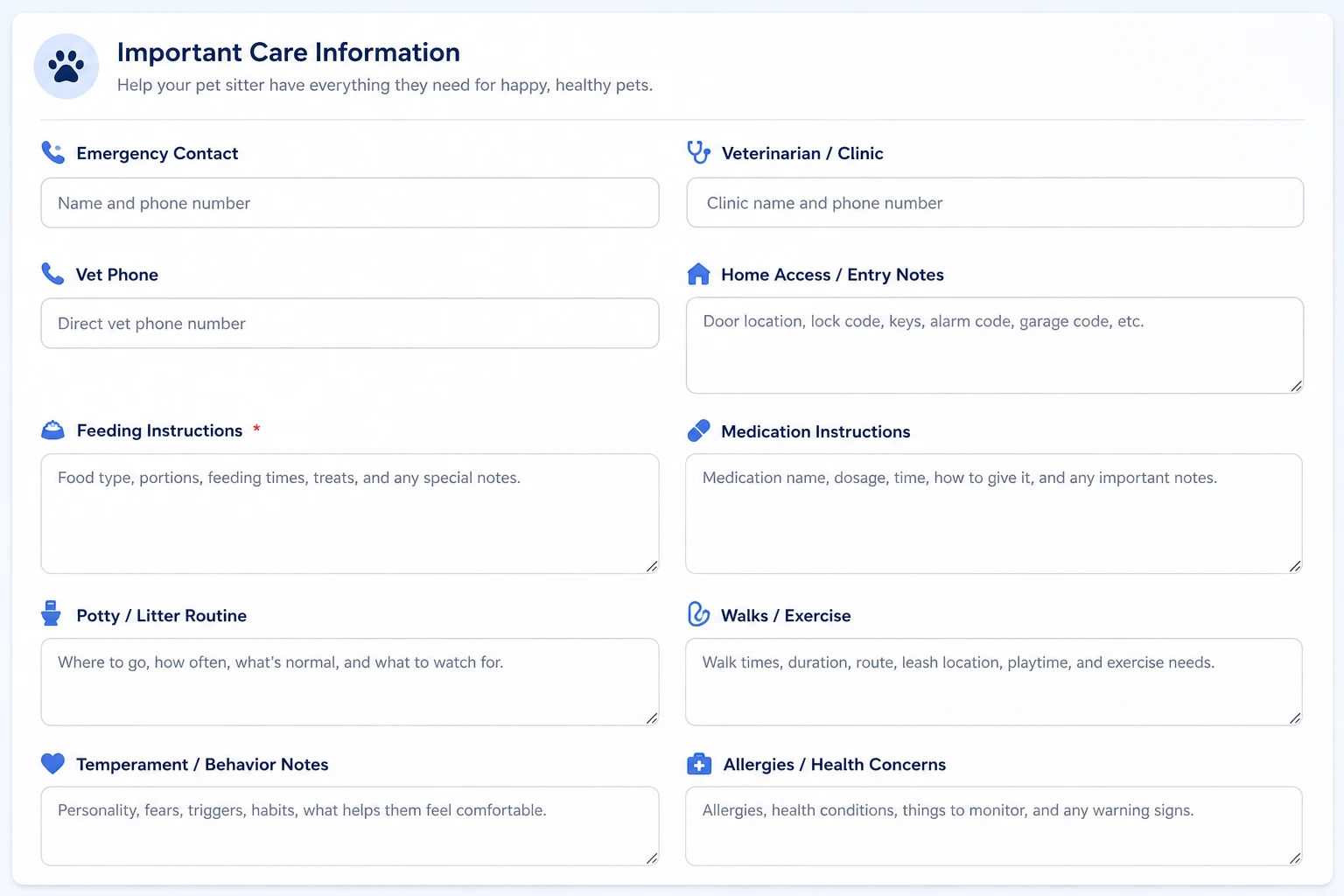
The builder keeps related information together so the sitter can find answers quickly.
Explain Bathroom, Litter, Walking, and Exercise Routines
Your sitter needs to know what a normal day looks like.
For dogs, include:
- Typical walk and bathroom times
- Leash and harness location
- Preferred route
- Yard, fence, and gate instructions
- Waste bag location
For cats, include:
- Litter box location
- How often it should be scooped
- Where clean litter is stored
- Waste disposal instructions
- Any unusual litter habits
You can also explain normal exercise, playtime, energy level, and physical limitations. The goal is to preserve the routine without accidentally turning a quiet weekend into pet boot camp.
Describe the Personality Behind the Paw Prints
Your pet’s personality may be one of the most valuable parts of the guide.
Use the form to describe:
- Temperament
- Fears and triggers
- Hiding behavior
- Separation anxiety
- Reactions to strangers or other animals
- Door-dashing or food guarding
- Common commands
- Favorite comfort items and routines
Be honest. This is not the time to describe a serious behavior concern as “a little quirky.”
A clear note such as, “Max becomes nervous around unfamiliar dogs; cross the street when another dog approaches,” gives the sitter something useful to act on.
Add Home Access, Supply Locations, and Off-Limit Areas
Pet care also means entering, using, and securing the home properly.
The form can document:
- Which door to use
- Key or entry instructions
- Alarm, gate, and lock reminders
- Doors or windows that must stay closed
- Rooms that are off-limits
- Where food, treats, medication, and cleaning supplies are stored
- Leash, carrier, or crate location
Only include the security information the sitter genuinely needs. The form should support safe pet care, not become the complete autobiography of your home alarm system.
Build a Daily Care Schedule
The daily schedule gives your sitter a dependable framework without requiring every minute to be planned.
You might include:
- Breakfast and dinner
- Walks or bathroom breaks
- Medication times
- Playtime
- Litter checks
- Bedtime routines
Example Daily Schedule
- 7:30 a.m. — Breakfast and fresh water
- 8:00 a.m. — Short walk
- 1:00 p.m. — Check-in and litter scoop
- 5:30 p.m. — Dinner
- 8:00 p.m. — Medication
- 9:00 p.m. — Final bathroom break
Pets do not own watches, but they somehow know when dinner is three minutes late.
Use the Check-In Log
The sitter can also record each visit or care period.
- Date and time
- Meals and water
- Medication
- Bathroom or litter activity
- Mood and behavior
- Additional notes
This is especially helpful when several visits happen during the day or when more than one person is helping.
You can still ask for photos. Some pet owners want one update each evening. Others would happily accept 38 photos, four videos, and a written report titled “Today’s Developments.”
Choose a Background and Generate the PDF
Once the information is complete, choose a supported background style. Plain white is the most printer-friendly. A decorative pet background can make the finished guide feel more personal.
Then generate the finished PDF. You can:
- Download it
- Print it
- Email it to the sitter
- Save it with your travel documents
- Keep a printed copy beside the pet supplies
One printable guide is easier to follow than a trail of last-minute messages.
No Account Required—and Your Information Is Not Stored
You do not need to create an account or begin a subscription to use the form builder.
Needy Cat Media does not store the personal information entered into the form. Your details are used to create the PDF, but they are not saved as a personal profile or user account.
Your Form, Your Information
Enter the care details, generate the PDF, download it, and keep control of the finished document.
Review the Guide With Your Sitter
Before you leave, walk through the form together.
Show the sitter:
- Food and medication
- Leash, harness, carrier, or crate
- Litter and bathroom supplies
- Emergency contacts
- The home-entry process
- Anything unusual about your pet
The form supports that conversation; it does not replace it. Reviewing everything together gives the sitter a chance to ask questions and helps you catch anything you forgot.
Do You Need to Complete Every Section?
No.
A healthy cat with a simple feeding routine may not need a detailed medication schedule. An older dog with several medications and mobility concerns may require more information.
Focus on details that affect:
- Safety
- Health
- Daily care
- Behavior
- Emergency decisions
- Home access
The builder is there to guide you, not force you to write a complete pet biography. Clear and useful beats long and complicated.
Why Use the Form Builder Instead of Sticky Notes?
Sticky notes are useful. They are also small, easy to lose, and apparently very attractive to cats who enjoy pushing things off counters.
A structured Pet Sitting Form is easier to:
- Read
- Update
- Share
- Review
- Use during an emergency
Feeding instructions, veterinary contacts, medications, schedules, and home details all stay together in one organized document.
A Little Preparation Helps Everyone Relax
Leaving your pet may never feel completely easy. You care about them, and you want to know they are safe, comfortable, and understood.
A clear Pet Sitting Form helps your sitter step into the routine with confidence. It reminds you of the details worth sharing, keeps everything organized, and creates one printable guide that is easy to follow.
Your sitter will appreciate the preparation. You will have fewer reasons to worry. Your pet may still act like you disappeared for several years when you return, but at least dinner arrived on time.
If this guide helped, give it a thumbs up.
0Some content may be drafted or edited with the help of AI tools, then reviewed and published by Needy Cat Media.